Visual Guide: AI Study Workflow
February 1, 2026
When people say “AI helped me study,” most of the time they mean “AI summarized something.” Summaries feel productive, but they don’t always create real understanding. This workflow is different: it uses AI like a tutor and forces you to practice, get feedback, and repeat.
What this workflow is trying to fix
The biggest problem with studying is thinking “I get it” because you recognize the notes, then bombing questions because you never practiced pulling the answer out of your own head. This workflow is designed to make the hard part happen on purpose: retrieval.
Step 1: Turn the topic into questions (not notes)
First, I give AI my topic and ask it to act like a tutor. The key rule is that it must quiz me one question at a time and wait for my answer before helping.
Prompt I use:
            You are my tutor for [topic]. Ask me ONE question at a time. Wait for my answer.
            After I answer, grade it (0-2 points), explain what I missed, then ask a harder follow-up.
            Keep going for 10 questions. No long lectures.
Step 2: The retrieval practice loop
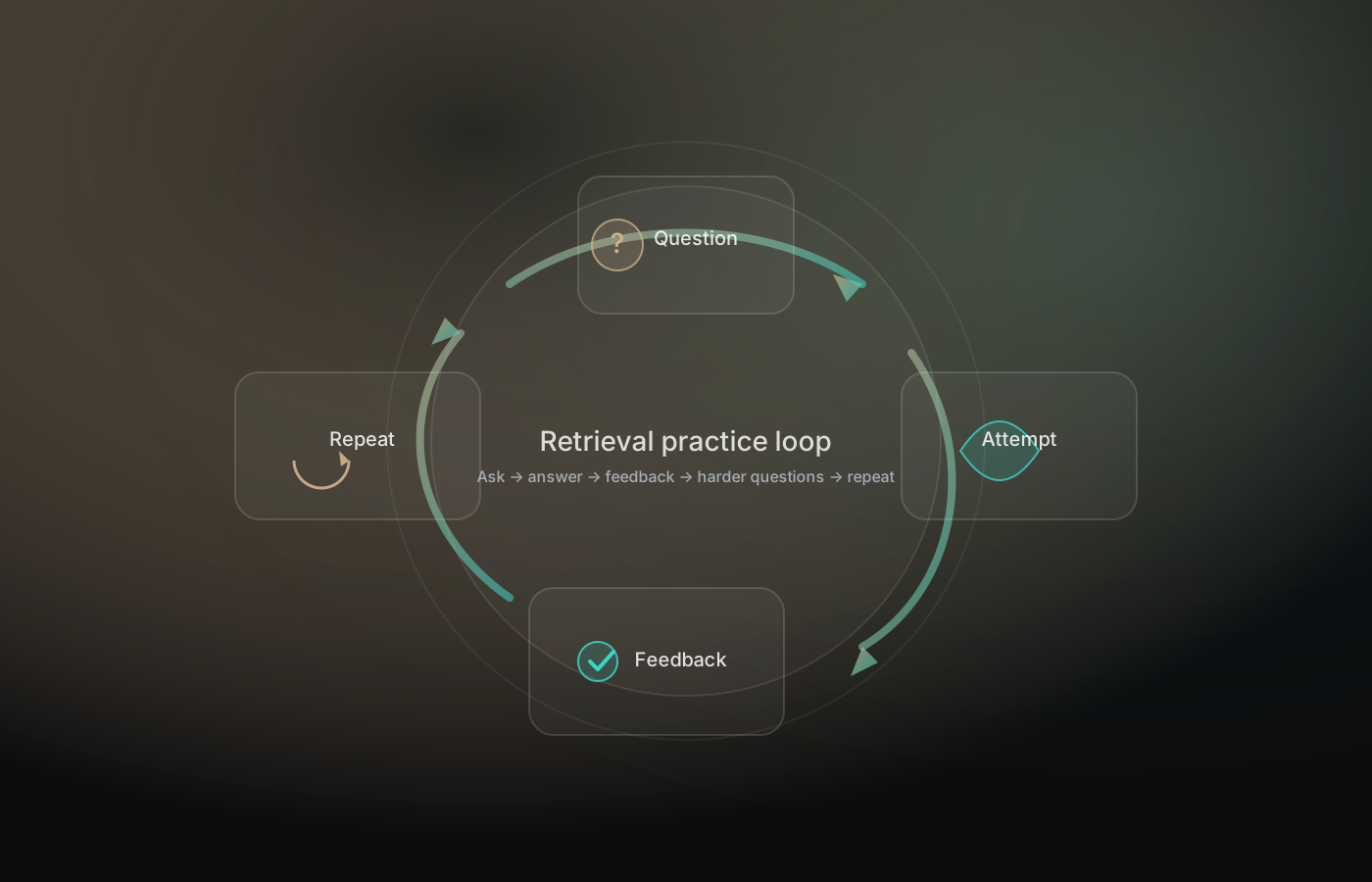
This is the part that actually changes your brain. You attempt the answer first, then the feedback repairs the gaps. AI is perfect for this because it can instantly adapt difficulty.
Step 3: Build a “weakness list” from your misses
After the quiz, I ask AI to summarize my weak spots as a short checklist. That way my next study session has a target instead of me re-reading everything.
Prompt I use:
            Based on the questions we just did, list my top 5 weak areas.
            For each one, give me: (1) what I got wrong, (2) the correct idea in one sentence,
            and (3) a mini question to test it again tomorrow.
Step 4: Spaced review plan (10–20 minutes a day)
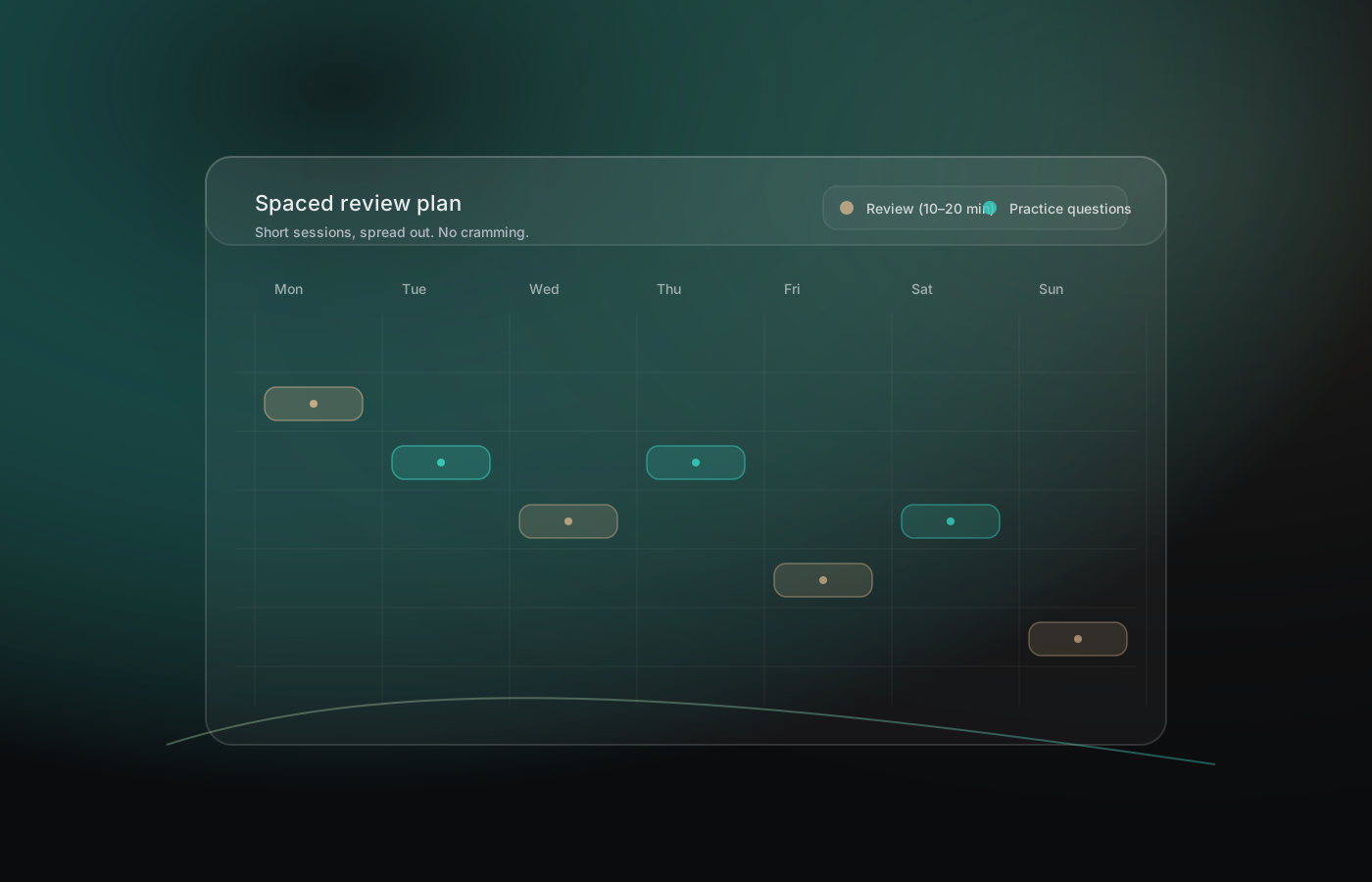
If I only do one session, I forget. The fix is small review sessions spread across the week. I use AI to build a schedule that re-tests my weak areas multiple times without making me do a full re-study.
Prompt I use:
            Make a 7-day spaced review plan for my weak areas.
            Keep it to 10–20 minutes per day.
            Each day should include 3 questions and 1 quick explanation.
            Day 1 should be easiest, Day 7 should be hardest.
What makes this “AI-powered” instead of just normal studying
The advantage isn’t that AI gives answers. It’s that AI creates adaptive practice. It can generate unlimited questions, grade your attempts, and keep your review focused. That makes studying feel less random and way more efficient.
Mini challenge (what I’m doing next)
For my next unit, I’m going to use this workflow for one week straight and compare: how confident I feel, how many practice questions I did, and how I perform on the next quiz.