AI as a Cognitive Amplifier: Why Retrieval Practice Beats Summaries
February 10, 2026
For the first few weeks of using AI to study, I thought I was doing everything right. I was generating summaries, cleaning up notes, and getting clear explanations. The problem is my quiz scores did not improve the way I expected. That forced me to switch from “AI explains to me” to “AI forces me to think.”
The problem with AI summaries
Summaries feel productive because they make the material seem clear. But “it looks familiar” is not the same thing as “I can answer questions about it.” When AI does all the explaining, it can accidentally turn studying into passive reading.
The hardest part of learning is pulling an answer out of your head under pressure. That is why retrieval practice is so powerful: it trains recall, not recognition.
What retrieval practice actually is
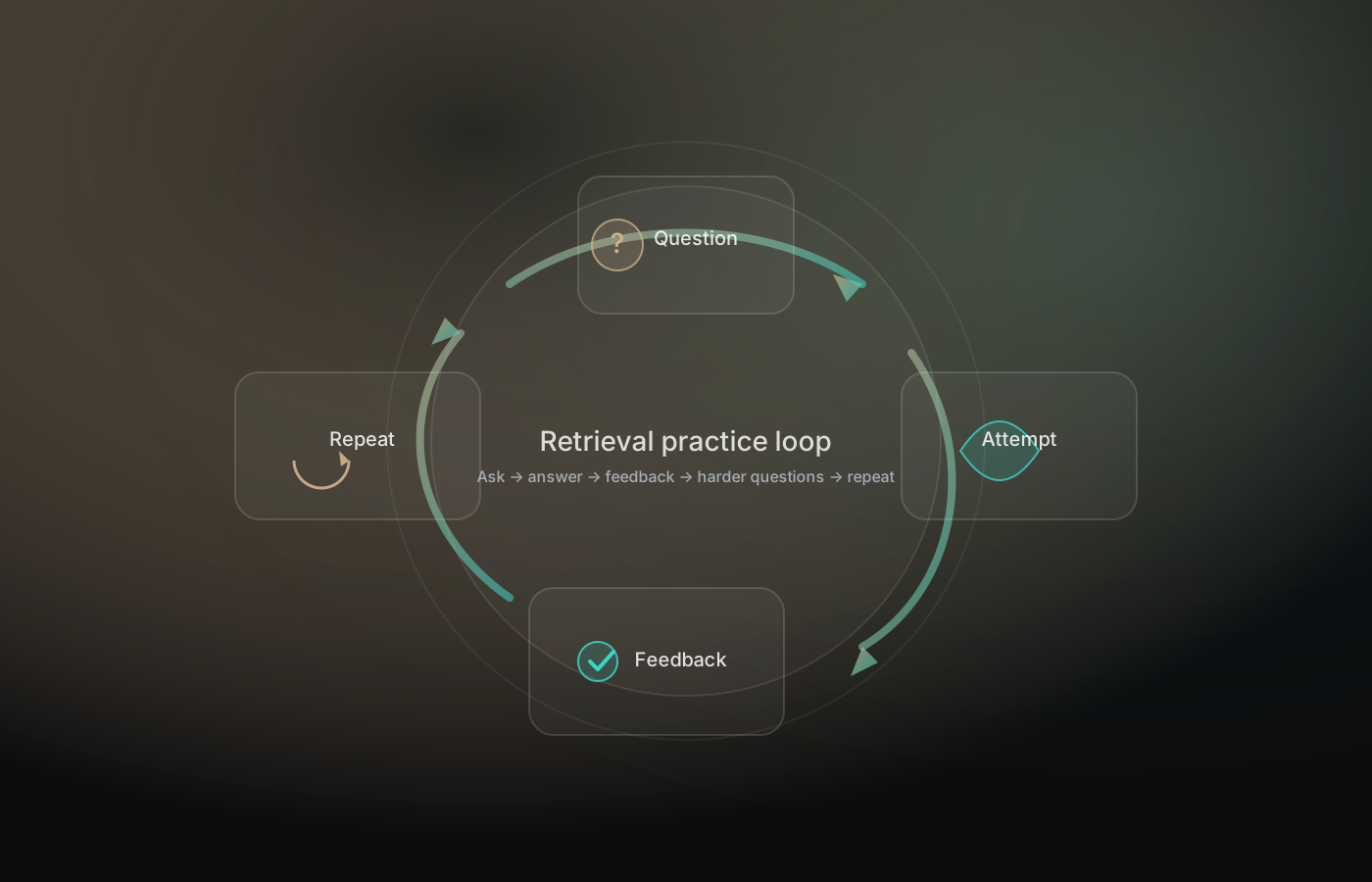
Retrieval practice means attempting to remember information before looking at the answer. The key is the order: attempt first, feedback second. That “struggle” is not a bug. It is the learning.
Passive AI vs structured AI
Here is the difference I noticed after testing both approaches.
Passive AI: “Summarize Chapter 5.” It looks great, it feels easy, and I feel confident. But the confidence is often fake because I did not practice answering anything.
Structured AI: “Quiz me one question at a time, wait for my answer, then grade it and ask a harder follow-up.” This feels slower and harder, but my weak spots become obvious fast, and the learning sticks.
Where spaced repetition fits
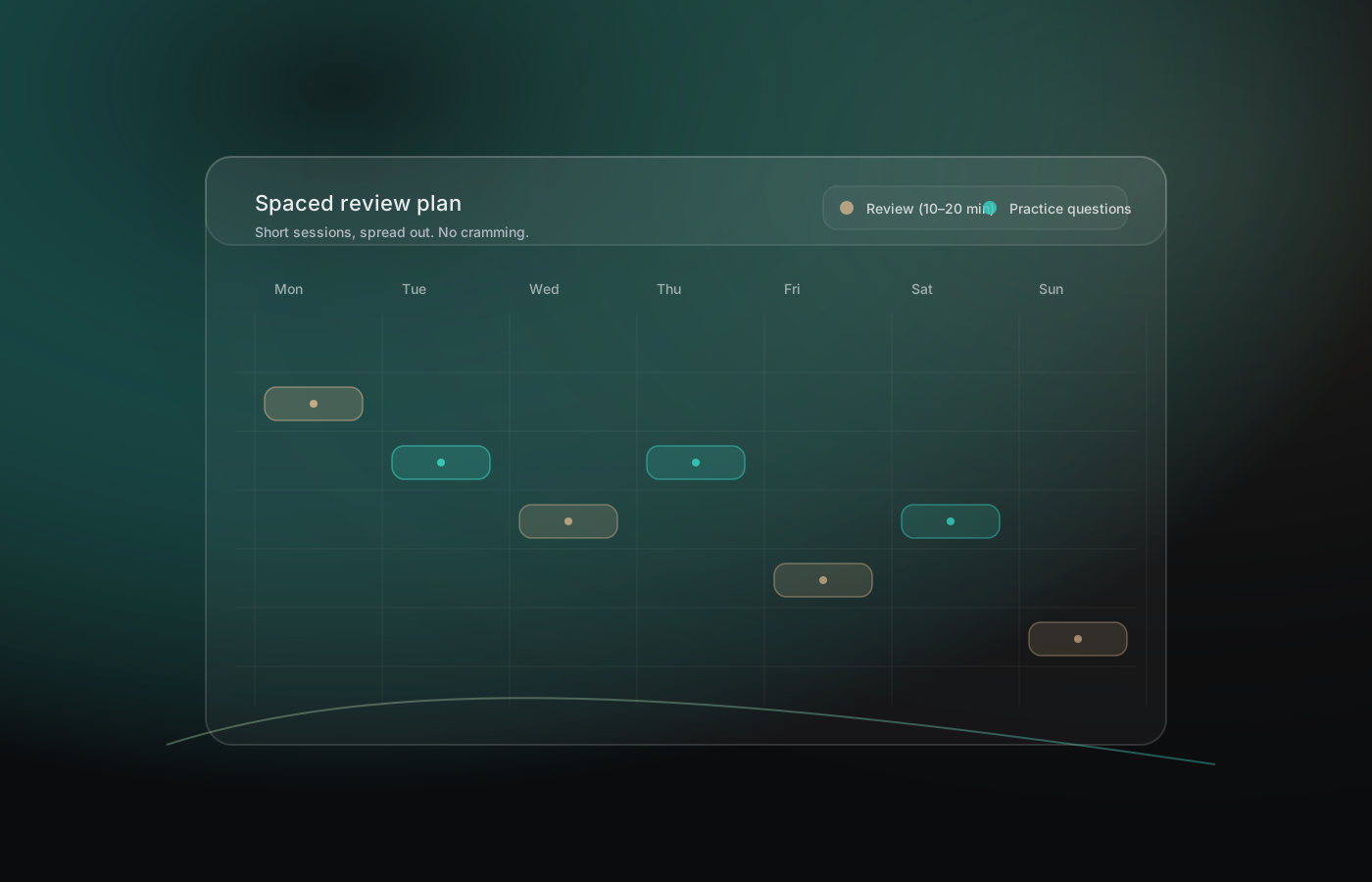
Even good retrieval practice can fade if you only do it once. Spaced repetition is the missing piece: small review sessions spread across the week instead of one long cram session. AI makes this easy because it can generate a plan that targets only what you missed.
The system I actually use
This is the workflow I keep coming back to because it is simple and it works.
- Quiz: AI asks 10 questions one at a time, adapting difficulty.
- Feedback: I answer first, then AI explains what I missed.
- Weakness list: AI gives my top weak areas in plain language.
- Spaced plan: AI creates 5–7 days of mini review sets.
- Retest: End-of-week test that mixes easy + hard questions.
Prompts you can copy
1) Tutor quiz prompt
            You are my tutor for [topic]. Ask ONE question at a time. Wait for my answer.
            After I answer, grade it (0-2 points), explain what I missed, then ask a harder follow-up.
            Do 10 questions total. No long lectures.
2) Weakness list prompt
            Based on my answers, list my top 5 weak areas.
            For each one: (1) what I got wrong, (2) the correct idea in one sentence,
            (3) one new practice question for tomorrow.
3) Spaced review plan prompt
            Make a 7-day review plan for my weak areas. Keep it 10–20 minutes per day.
            Each day should include 3 questions and 1 short explanation.
            Increase difficulty gradually from Day 1 to Day 7.
My conclusion
After five weeks of building and testing this newsletter, the biggest thing I learned is that AI is not a shortcut to learning. It is a multiplier. If you use it passively, it multiplies comfort. If you use it to force retrieval, it multiplies real learning.
The difference is structure. AI can generate anything, but you have to make it generate the things that actually train your brain.